
What a TCM cupping session is like
A visit with a Chinese medicine practitioner is usually broader than “cups only.” Here is a realistic flow.
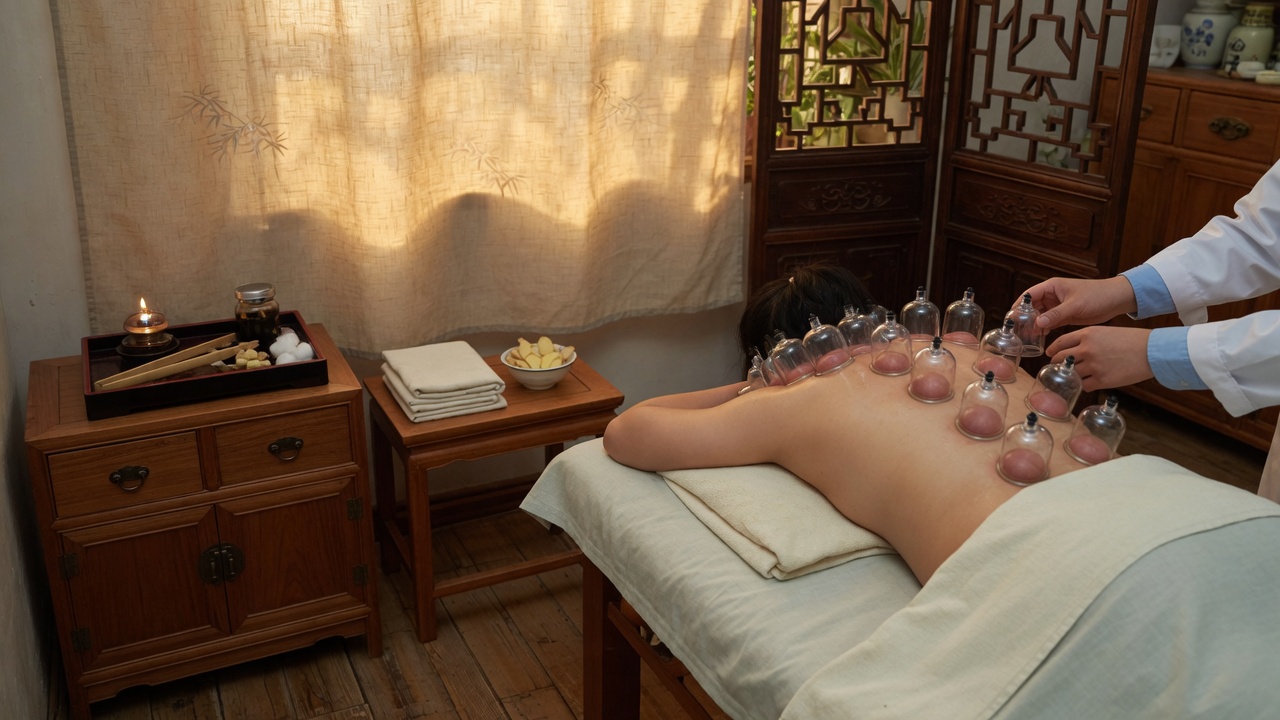
Before you arrive
- Eat a light meal; avoid arriving intoxicated or fasting to the point of weakness
- Wear clothing that allows access to the back and limbs
- Bring a list of medications and major medical history
- Plan for visible marks for several days if retained cupping is likely
During the visit
-
Chief complaint & history
When the problem started, what makes it better or worse, temperature preference, digestion, sleep, stress, and women’s health history if relevant.
-
Tongue and pulse
Tongue body color, shape, and coat; pulse rate, depth, and quality at the wrist positions—central to bian zheng.
-
Physical findings
Channel palpation, range of motion, temperature of the skin, ashi points.
-
Treatment principle
The practitioner decides: release exterior, warm channels, move stasis, drain damp, etc.—and whether cupping, needles, moxa, or herbs best serve that principle.
-
Ba guan application
Fire or pump cups; retained, moving, flash, or wet method as indicated. You should feel strong suction, not panic-level pain. Speak up to adjust.
-
Often: acupuncture or other modalities
Needles may be placed before or after cups. Herbal recommendations may follow.
-
Rest and counsel
Short rest; advice on keeping warm, avoiding wind after exterior-releasing work, hydration, and activity level.
Sensations that are common
- Pulling, warmth, pressure under the cup
- A “released” feeling after removal
- Mild fatigue or deep relaxation afterward
- Temporary tenderness over marked areas
Classical aftercare notes
- Loose clothing over marks
- Gentle movement unless told to rest
- No picking at blisters if they rarely form—contact the clinic
- Follow herbal and lifestyle instructions given for your pattern