
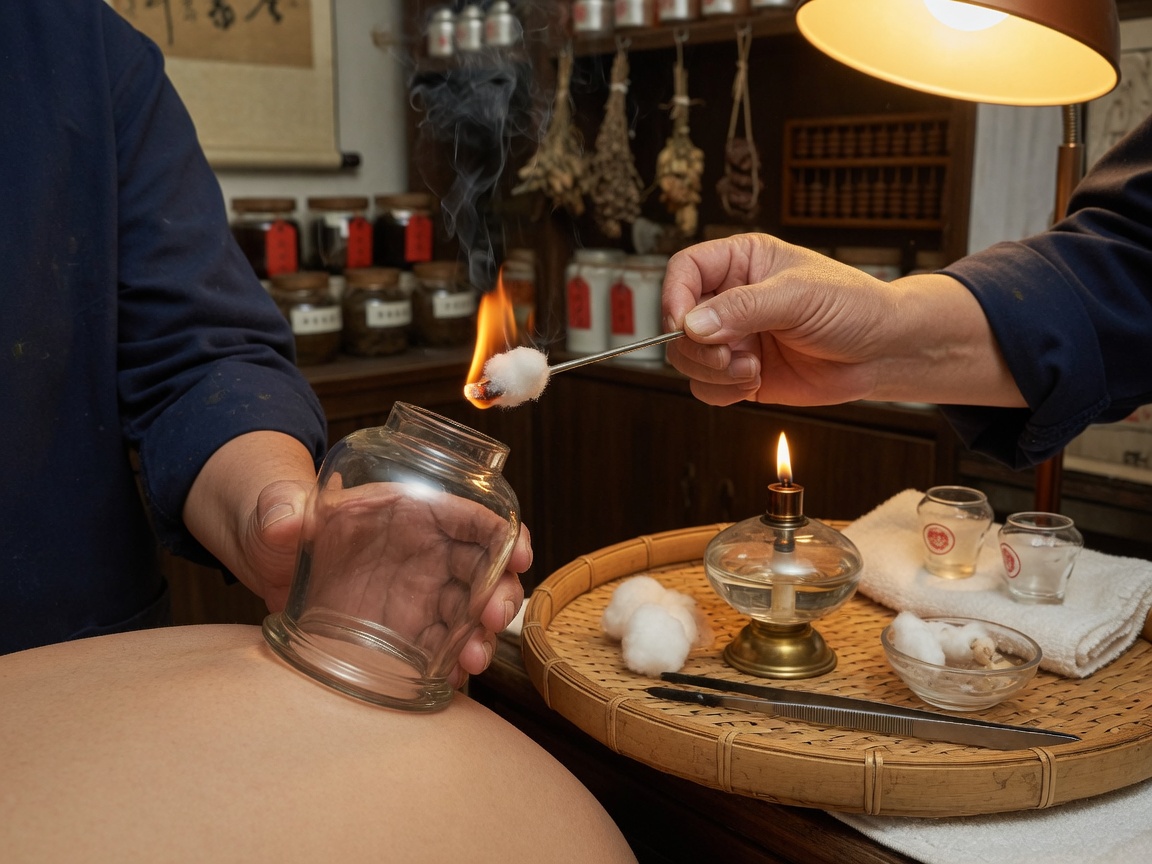
Definition
Chinese cupping creates a partial vacuum inside a cup (historically bamboo or pottery; today often glass) so the cup adheres to the skin. The suction draws the superficial tissues upward. In TCM terms, this opens the pores, moves stagnant qi and blood in the collaterals, and can help expel exterior pathogens.
Classical therapeutic actions
Textbooks and clinical manuals commonly list ba guan actions such as:
- Warming and promoting the free flow of qi and blood in the channels
- Dispelling cold and dampness
- Expelling wind and releasing the exterior (especially with upper-back cupping)
- Invigorating blood and resolving stasis
- Reducing swelling and easing pain from obstruction
- In wet cupping, draining heat or blood heat when the pattern supports it
How TCM cupping differs from generic “cupping”
| Aspect | TCM clinic (ba guan) | Generic wellness setting |
|---|---|---|
| Decision basis | Pattern differentiation (bian zheng) | Often muscle tightness alone |
| Theory | Qi, blood, channels, pathogens | Circulation / fascia language |
| Methods | Fire, flash, moving, wet when indicated | Often silicone or pump only |
| Combined care | With acupuncture, herbs, moxa, gua sha | Often stand-alone add-on |
| Mark interpretation | Sha discussed clinically | Usually “expected bruises” |
Traditional materials
Historically, bamboo cups were boiled and applied while warm; pottery and later glass became common. Glass fire-cupping remains iconic in Chinese medicine clinics because a brief flame consumes oxygen and creates suction. Pump cups and silicone cups are modern conveniences some practitioners also use—still under TCM treatment logic when the practitioner is working from pattern diagnosis.
When a practitioner may choose ba guan
- Wind-cold exterior patterns with stiff neck and upper back
- Bi syndrome—wind-cold-damp painful obstruction
- Blood stasis pain, fixed and stabbing in quality
- Certain respiratory exterior or residual cold patterns (with clinical judgment)
- Soft-tissue stagnation after strain, as part of a broader plan
Cupping is less appropriate—or modified—when there is high fever of serious illness, bleeding disorders, fragile skin, pregnancy (area-dependent), or severe deficiency. See safety.